How AI Is Transforming Education
Artificial Intelligence is reshaping education by personalizing learning, assisting teachers, and making quality education more accessible. Discover how AI is changing classrooms around the world.
Listen to this article
How AI Is Transforming Education
10 parts · Tap play to start
Uses a natural English voice available through your browser or device. Article text is not uploaded to NVR Nexus.
Introduction
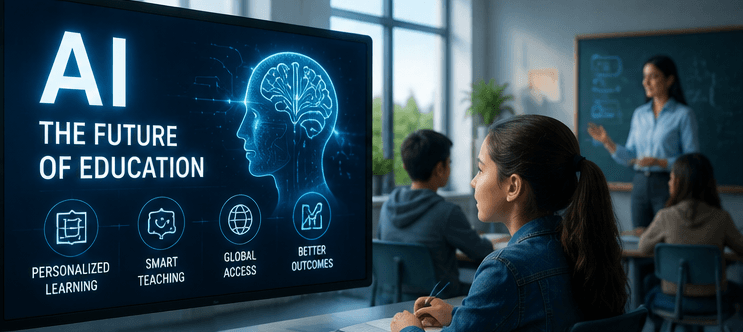
Artificial Intelligence is changing the way people learn around the world.
Schools, colleges, universities, and online learning platforms are increasingly using AI to create more engaging and personalized educational experiences.
Instead of delivering the same lessons to every student, AI can adapt learning based on individual strengths, weaknesses, and progress.
From intelligent tutors to automated grading systems, AI is becoming a powerful assistant for both students and teachers.
The goal is not to replace educators but to make learning more effective, accessible, and enjoyable.
Personalized Learning for Every Student
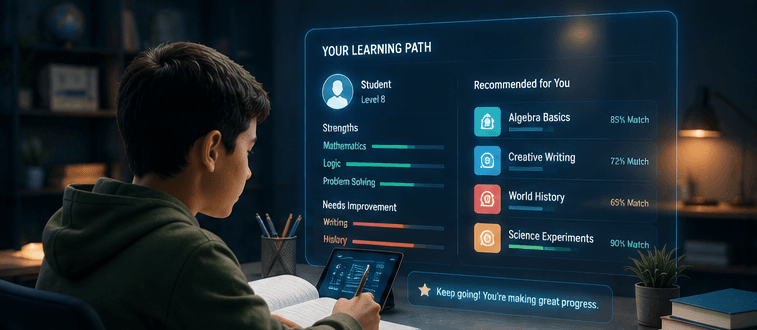
Traditional classrooms often teach every student using the same pace and materials.
AI-powered learning platforms can identify how each student learns best and recommend personalized lessons, exercises, and study plans.
Students who need extra support receive additional practice, while advanced learners can move ahead more quickly.
This personalized approach helps improve understanding, confidence, and long-term learning outcomes.
Every student learns differently. AI helps education adapt to the learner—not the other way around.
AI Tutors Available Anytime
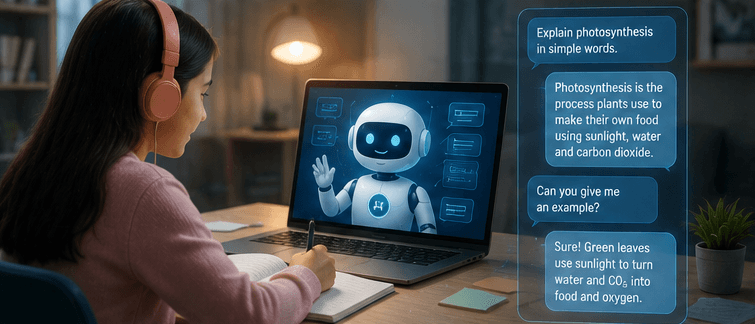
AI tutors are becoming valuable learning companions for students.
They can explain difficult concepts, answer questions, generate quizzes, summarize chapters, and provide step-by-step guidance at any time of day.
Unlike traditional tutoring, AI is available 24/7, allowing students to learn whenever they need help.
These tools encourage independent learning while supporting classroom education.
- Instant Answers
- Homework Assistance
- Practice Questions
- Language Learning
- Concept Explanations
- Study Planning
Helping Teachers Save Time
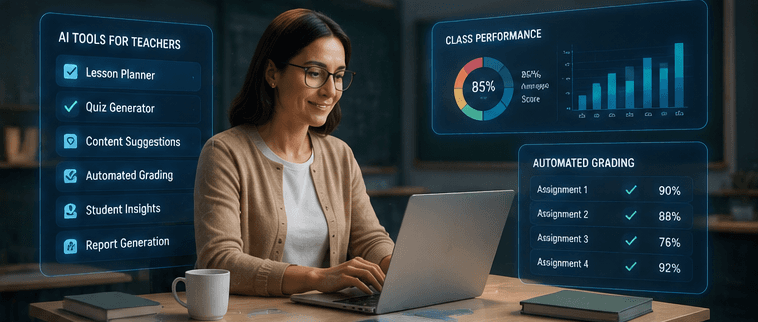
Teachers spend many hours grading assignments, preparing lessons, and managing administrative tasks.
AI can automate repetitive work such as grading quizzes, generating lesson plans, organizing classroom materials, and tracking student progress.
By reducing administrative workload, teachers can spend more time interacting with students and providing meaningful guidance.
Smarter Online Learning

Online education has grown rapidly, and AI is making digital learning even more interactive.
Modern learning platforms recommend courses, adjust difficulty levels, monitor progress, and provide personalized feedback.
AI helps students stay motivated by identifying areas where they struggle and suggesting additional resources.
- Adaptive Courses
- Learning Analytics
- Progress Tracking
- Smart Recommendations
- Interactive Lessons
- Personalized Feedback
Breaking Language Barriers
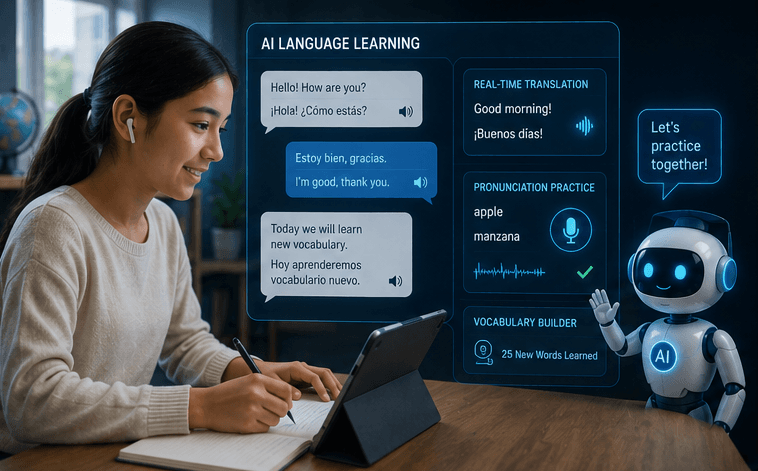
AI-powered translation and speech recognition tools are making education more accessible worldwide.
Students can translate learning materials, receive subtitles during lectures, and practice speaking new languages with AI assistants.
This allows learners from different backgrounds to access high-quality educational content regardless of language.
Benefits and Challenges
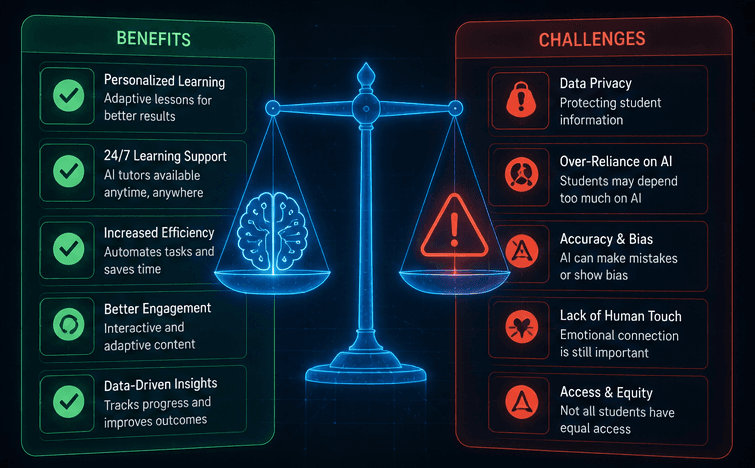
AI offers exciting opportunities, but responsible implementation remains important.
Schools must protect student privacy, ensure fairness, and teach learners how to use AI ethically.
AI-generated information should always be verified, and critical thinking should remain a core part of education.
Technology works best when it supports teachers rather than replacing them.
- Personalized Learning
- Teacher Productivity
- 24/7 Learning Support
- Student Privacy
- Ethical AI
- Fact Verification
- Digital Literacy
- Human Guidance
The Future of Education
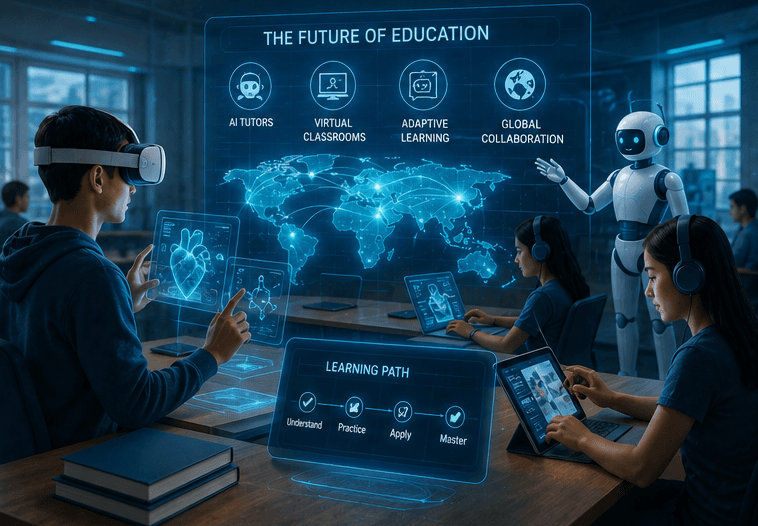
The classroom of the future will combine human teaching with intelligent technology.
Students may learn using AI tutors, virtual reality simulations, personalized learning assistants, and collaborative digital classrooms.
Teachers will increasingly act as mentors, guiding creativity, problem-solving, and critical thinking while AI handles repetitive tasks.
Education will become more flexible, inclusive, and tailored to every learner.
Conclusion
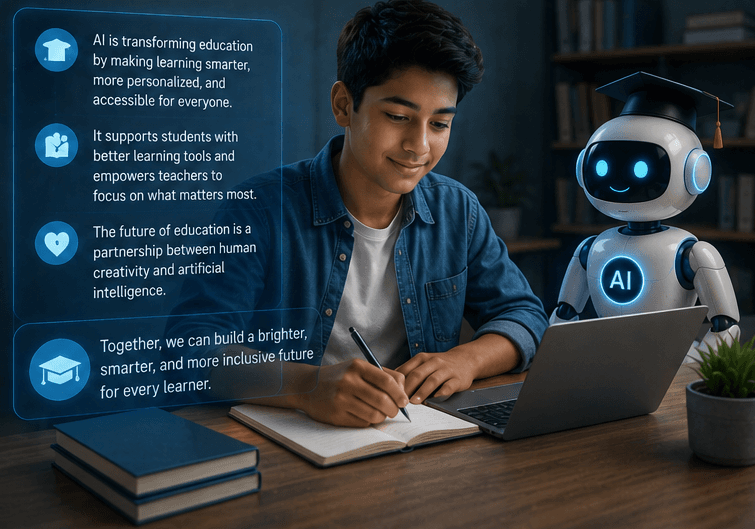
Artificial Intelligence is transforming education by making learning more personalized, accessible, and efficient.
From AI tutors and adaptive learning platforms to smarter classrooms and automated teaching tools, AI is helping students and educators achieve better outcomes.
While technology cannot replace great teachers, it can empower them with better tools and insights.
The future of education lies in combining human expertise with AI to create richer learning experiences for everyone.
Knowledge Hub
Related Tech Explained topics
Plain-language explainers to help you understand the concepts behind this article.

Tech Explained · Artificial Intelligence
What is Artificial Intelligence (AI)?
Understand what artificial intelligence is, how AI systems learn and produce outputs, how machine learning and generative AI differ, and how to assess their benefits and risks.

Tech Explained · Software Development
What is an API (Application Programming Interface)?
Understand what an API is, how requests and responses work, how REST, GraphQL, RPC and webhooks differ, and how authentication, errors, versioning and security shape reliable integrations.
Share this article
Keep reading
Related Articles
More stories on similar topics from the NVR Nexus blog.

How AI Is Changing Media and Journalism
Artificial intelligence is changing how newsrooms research stories, analyze evidence, create formats, reach audiences, and verify digital media. The opportunity is significant—but so are the risks to accuracy, transparency, trust, and editorial independence.

How AI Is Changing the Legal Industry
Artificial Intelligence is transforming the legal industry through contract analysis, legal research, document automation, compliance monitoring, and predictive case insights. Discover how AI is reshaping the future of legal services.

How AI Is Changing Sports
Artificial Intelligence is transforming sports through performance analytics, injury prevention, intelligent coaching, AI referees, fan engagement, and data-driven decision making. Discover how AI is reshaping the future of sports.