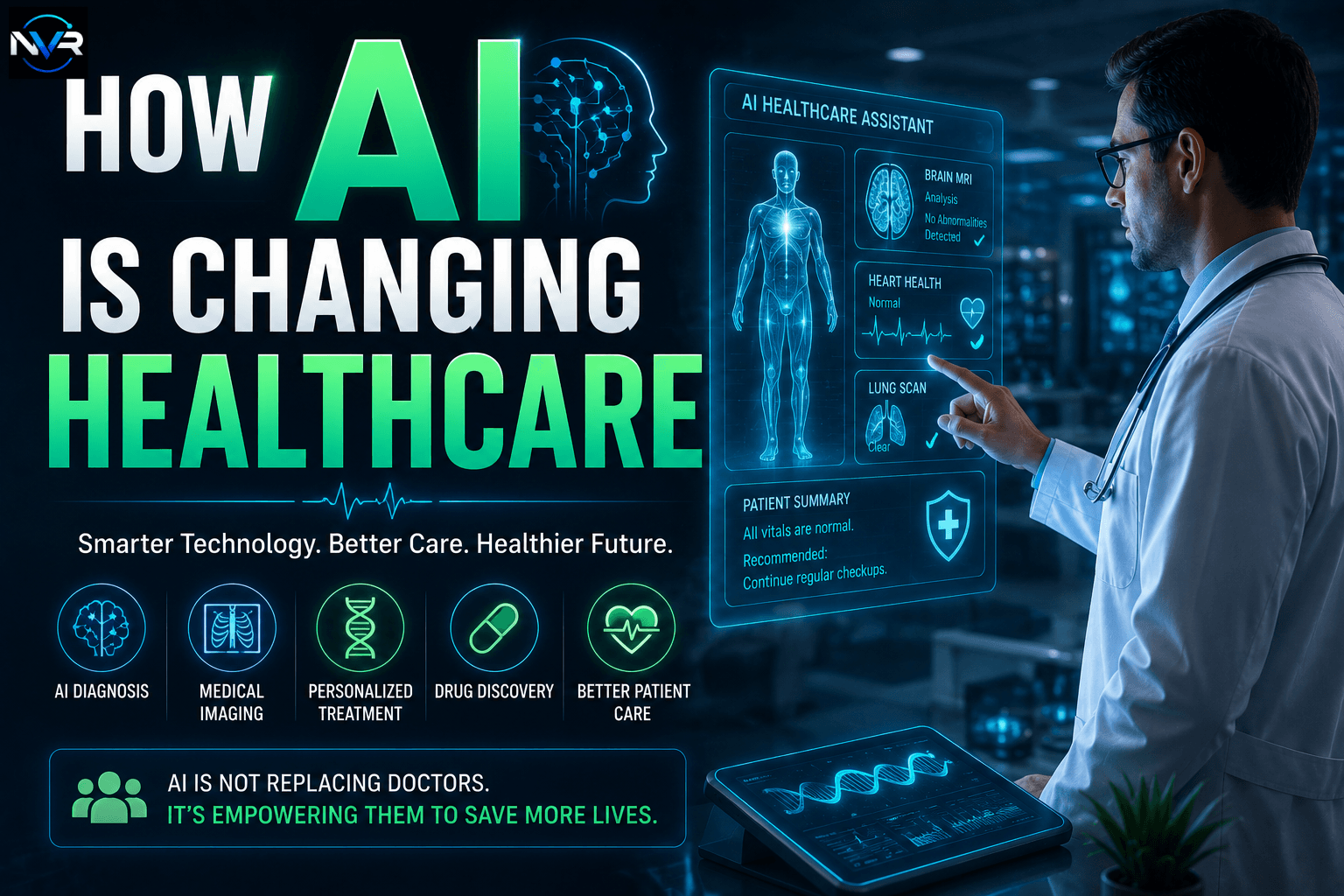
How AI Is Changing Healthcare
Artificial Intelligence is transforming healthcare by helping doctors diagnose diseases faster, improving medical research, and enhancing patient care. Discover how AI is reshaping the future of medicine.
Listen to this article
How AI Is Changing Healthcare
10 parts · Tap play to start
Uses a natural English voice available through your browser or device. Article text is not uploaded to NVR Nexus.
Introduction
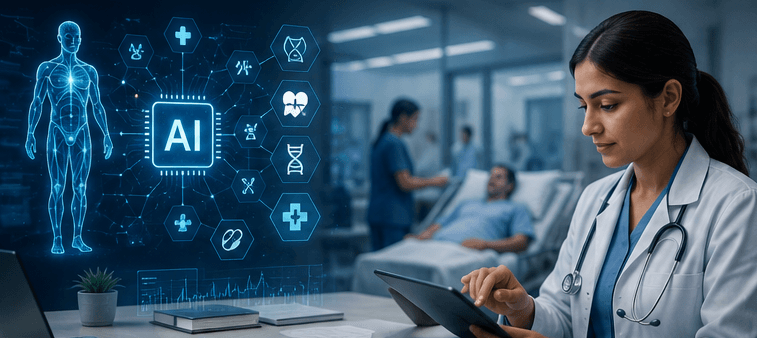
Artificial Intelligence is rapidly transforming healthcare around the world.
Hospitals, clinics, researchers, and healthcare professionals are increasingly using AI to improve diagnosis, treatment, and patient outcomes.
What once seemed like science fiction is becoming part of everyday medical practice.
From detecting diseases earlier to accelerating medical research, AI is helping healthcare systems become more efficient and accessible.
While doctors remain essential, AI is becoming one of the most powerful tools supporting modern medicine.
AI Helps Detect Diseases Earlier
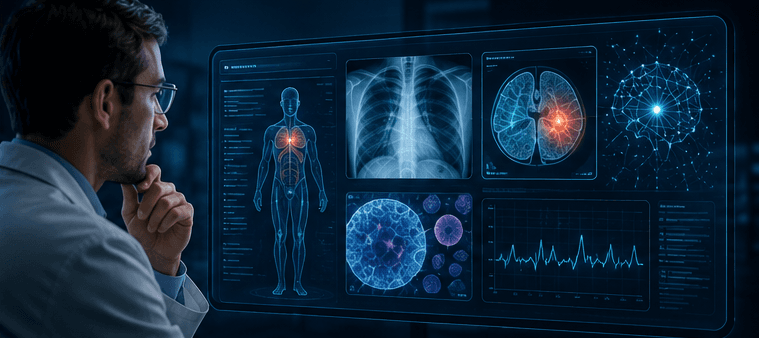
One of the most promising applications of AI is disease detection.
AI systems can analyze medical data and identify patterns that may be difficult for humans to spot quickly.
Researchers are using AI to assist in detecting conditions such as cancer, heart disease, and neurological disorders.
Earlier diagnosis can allow patients to receive treatment sooner and improve their chances of recovery.
Earlier detection often means better treatment and better outcomes.
AI-Powered Medical Imaging
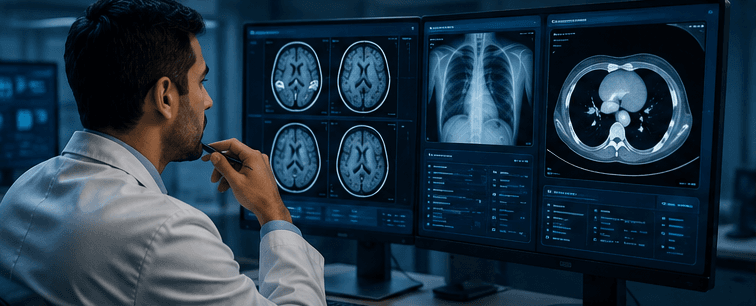
Medical imaging generates enormous amounts of information every day.
AI can assist radiologists by analyzing X-rays, CT scans, MRIs, and other medical images.
Rather than replacing specialists, AI acts as a second set of eyes that helps identify potential abnormalities.
This can improve efficiency while supporting more accurate diagnoses.
- X-Ray Analysis
- MRI Scanning
- CT Scan Review
- Tumor Detection
- Image Classification
- Radiology Assistance
Personalized Treatment Plans

Every patient is different, and AI helps healthcare providers move toward more personalized care.
By analyzing medical history, genetics, lifestyle factors, and treatment outcomes, AI can help identify treatment options that may be most effective for individual patients.
Personalized medicine aims to improve outcomes while reducing unnecessary treatments.
AI Assists Doctors and Healthcare Staff

Healthcare professionals spend significant time on administrative work.
AI-powered tools can help manage appointments, summarize medical records, generate documentation, and support clinical decision-making.
By reducing repetitive tasks, healthcare staff can spend more time focusing on patient care.
AI acts as an assistant that improves efficiency rather than replacing medical professionals.
- Medical Documentation
- Appointment Scheduling
- Clinical Support
- Patient Monitoring
- Workflow Automation
- Administrative Assistance
Accelerating Drug Discovery

Developing new medicines traditionally requires years of research and testing.
AI can analyze vast amounts of scientific data and help researchers identify promising drug candidates more quickly.
This can reduce development time and potentially accelerate the discovery of treatments for complex diseases.
Many pharmaceutical companies are already integrating AI into their research processes.
Benefits and Challenges
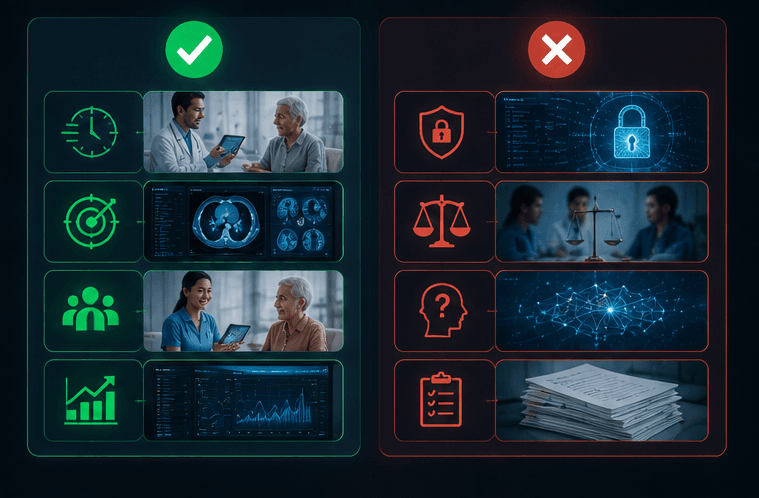
AI offers tremendous potential, but healthcare requires careful implementation.
Patient privacy, data security, transparency, and regulatory compliance remain critical concerns.
Healthcare organizations must ensure AI systems are accurate, trustworthy, and properly supervised.
Human oversight remains essential for responsible medical decision-making.
- Faster Diagnosis
- Improved Efficiency
- Better Patient Care
- Data Privacy
- Security Protection
- Human Oversight
- Regulatory Compliance
- Ethical AI
The Future of AI in Healthcare
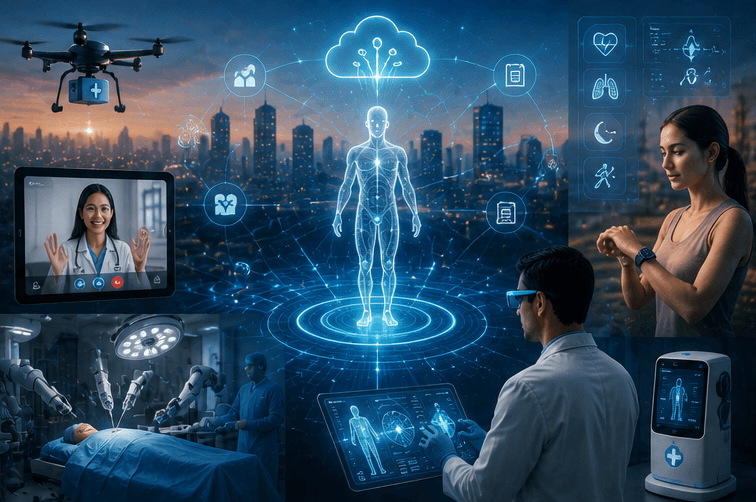
Over the next decade, AI is expected to become even more integrated into healthcare systems.
Advanced diagnostic tools, remote patient monitoring, robotic assistance, and predictive healthcare may become increasingly common.
Doctors and AI systems will likely work together to deliver faster, more personalized, and more effective medical care.
The future of healthcare will be shaped by collaboration between human expertise and intelligent technology.
Conclusion

Artificial Intelligence is becoming one of the most transformative technologies in modern healthcare.
From disease detection and medical imaging to personalized treatment and drug discovery, AI is improving how healthcare is delivered.
While challenges remain, the potential benefits are enormous.
The future of medicine is not about replacing doctors with AI—it is about empowering healthcare professionals with smarter tools that help save lives and improve patient outcomes.
Knowledge Hub
Related Tech Explained topics
Plain-language explainers to help you understand the concepts behind this article.

Tech Explained · Artificial Intelligence
What is Artificial Intelligence (AI)?
Understand what artificial intelligence is, how AI systems learn and produce outputs, how machine learning and generative AI differ, and how to assess their benefits and risks.

Tech Explained · Software Development
What is an API (Application Programming Interface)?
Understand what an API is, how requests and responses work, how REST, GraphQL, RPC and webhooks differ, and how authentication, errors, versioning and security shape reliable integrations.
Share this article
Keep reading
Related Articles
More stories on similar topics from the NVR Nexus blog.

How AI Is Changing Media and Journalism
Artificial intelligence is changing how newsrooms research stories, analyze evidence, create formats, reach audiences, and verify digital media. The opportunity is significant—but so are the risks to accuracy, transparency, trust, and editorial independence.

How AI Is Changing the Legal Industry
Artificial Intelligence is transforming the legal industry through contract analysis, legal research, document automation, compliance monitoring, and predictive case insights. Discover how AI is reshaping the future of legal services.

How AI Is Changing Sports
Artificial Intelligence is transforming sports through performance analytics, injury prevention, intelligent coaching, AI referees, fan engagement, and data-driven decision making. Discover how AI is reshaping the future of sports.