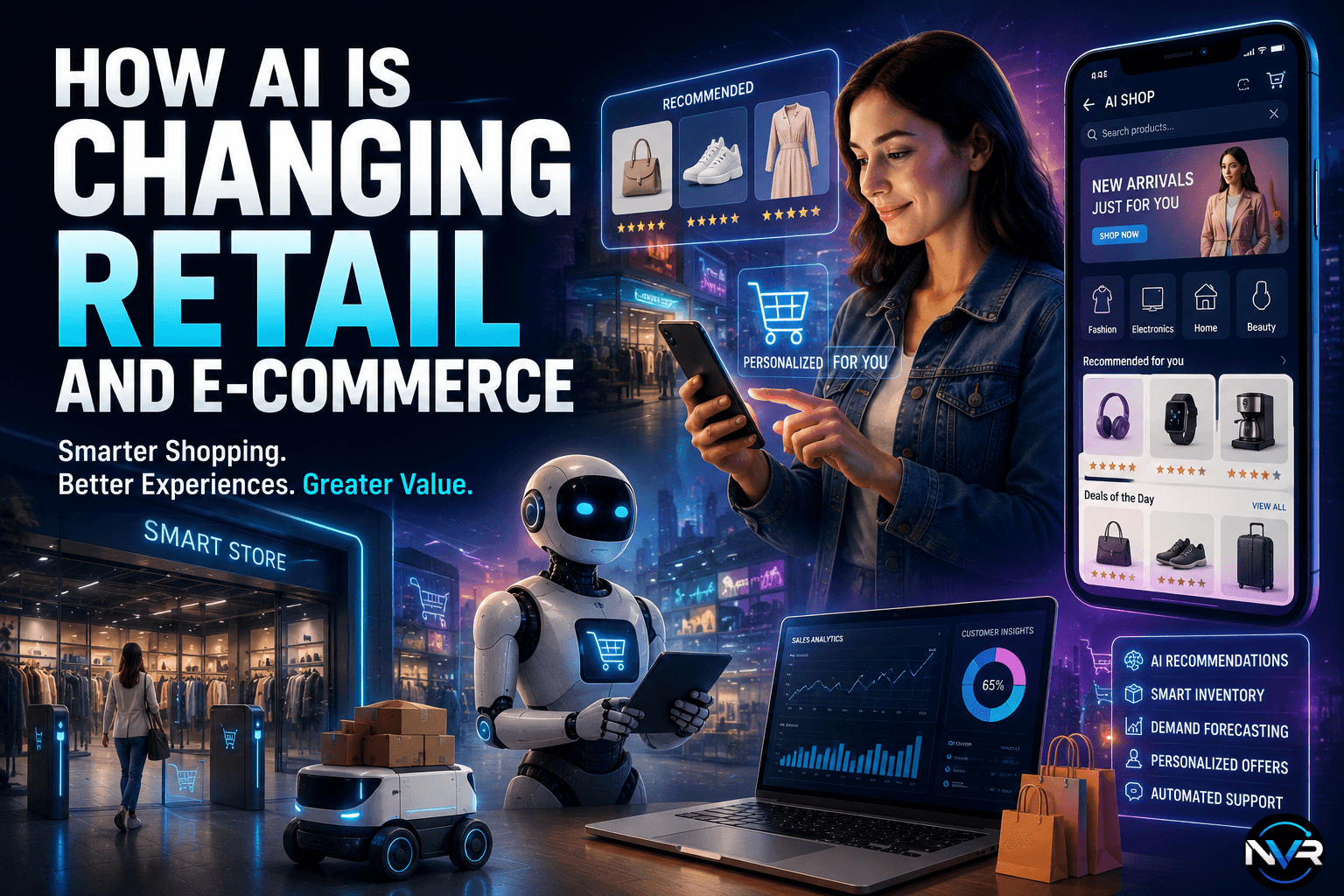
How AI Is Changing Retail and E-Commerce
Artificial Intelligence is transforming retail and e-commerce through personalized shopping, smart recommendations, inventory management, and automated customer service. Discover how AI is reshaping the future of shopping.
Listen to this article
How AI Is Changing Retail and E-Commerce
10 parts · Tap play to start
Uses a natural English voice available through your browser or device. Article text is not uploaded to NVR Nexus.
Introduction
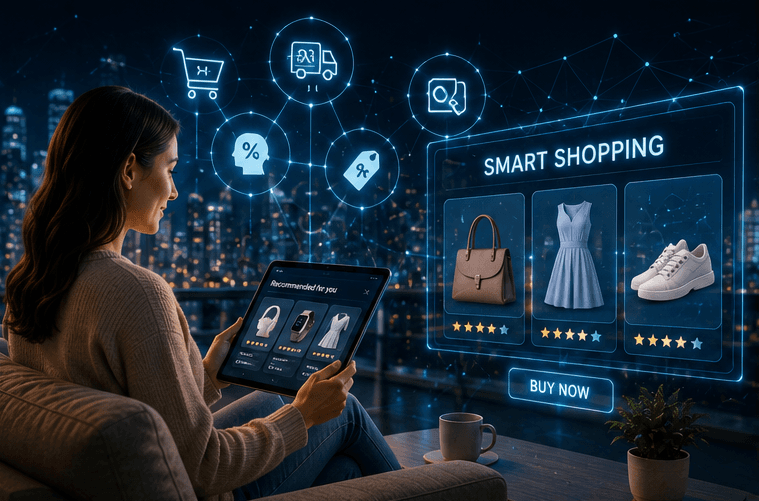
Retail and e-commerce are evolving rapidly with the help of Artificial Intelligence.
Whether shopping online or visiting physical stores, customers are experiencing smarter recommendations, faster service, and more personalized experiences.
Retailers are using AI to understand customer preferences, optimize inventory, automate operations, and improve decision-making.
Rather than replacing employees, AI is helping businesses deliver better customer experiences while operating more efficiently.
The future of shopping will combine human service with intelligent technology to create faster, smarter, and more convenient retail experiences.
Personalized Shopping Experiences
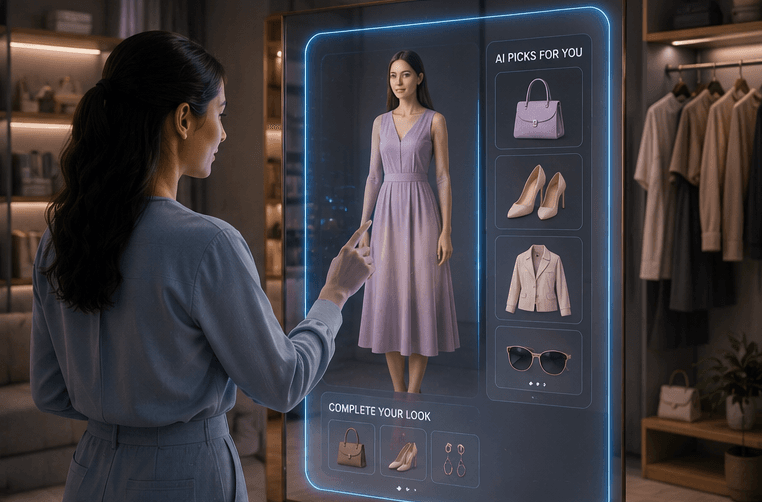
One of AI's biggest contributions to retail is personalization.
AI analyzes browsing history, previous purchases, preferences, and shopping behavior to recommend products that customers are more likely to buy.
Instead of showing the same products to everyone, retailers create personalized shopping experiences for each individual.
This improves customer satisfaction while helping businesses increase sales.
The best shopping experience is one that feels designed just for you.
Smarter Product Recommendations
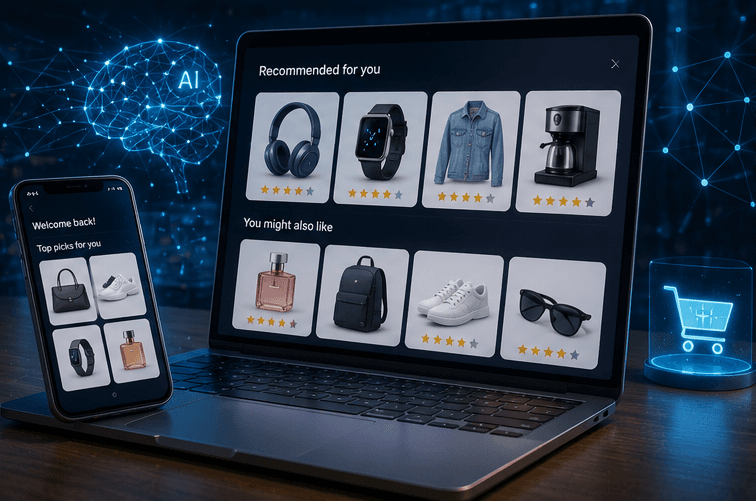
Recommendation engines have become a core part of modern e-commerce.
AI continuously learns from customer interactions to suggest products, complementary items, and seasonal offers.
As more shopping data becomes available, recommendations become increasingly accurate and relevant.
Customers discover products more easily while businesses improve conversion rates.
- Personalized Suggestions
- Cross-Selling
- Upselling
- Purchase Predictions
- Customer Preferences
- Recommendation Engines
AI-Powered Customer Support
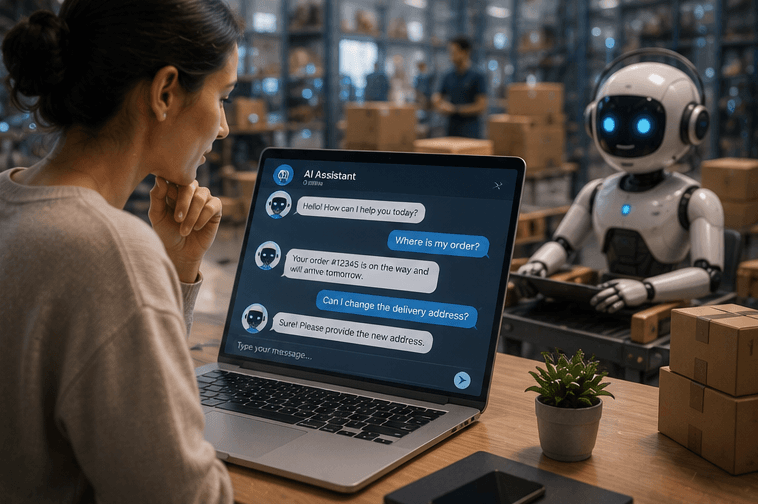
Retailers are increasingly using AI chatbots and virtual assistants to provide customer support around the clock.
These systems answer product questions, assist with orders, process returns, track deliveries, and resolve common issues within seconds.
By handling routine requests, AI allows customer service teams to focus on more complex problems.
Customers benefit from faster responses and improved shopping experiences.
Inventory and Demand Forecasting
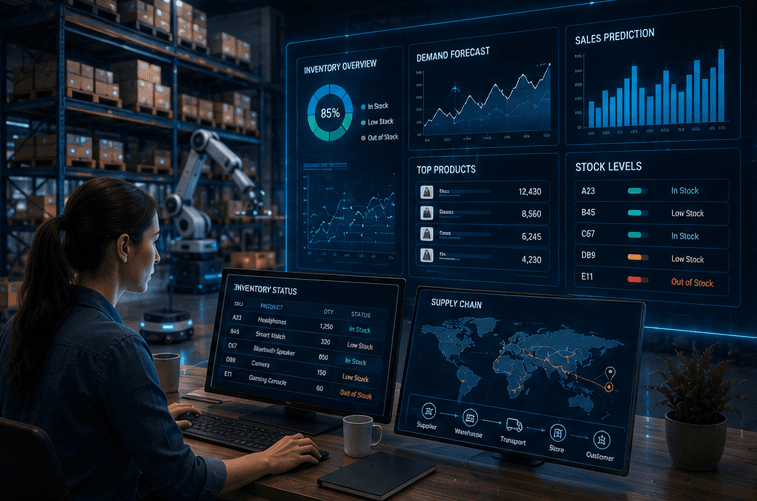
Managing inventory efficiently is essential for both online and physical stores.
AI analyzes historical sales, seasonal trends, promotions, and market demand to predict future inventory requirements.
Retailers can reduce stock shortages while avoiding excess inventory that increases storage costs.
Better forecasting helps businesses improve profitability and customer satisfaction.
- Demand Forecasting
- Inventory Optimization
- Stock Prediction
- Warehouse Management
- Supply Planning
- Sales Analytics
Cashierless Stores and Smart Retail
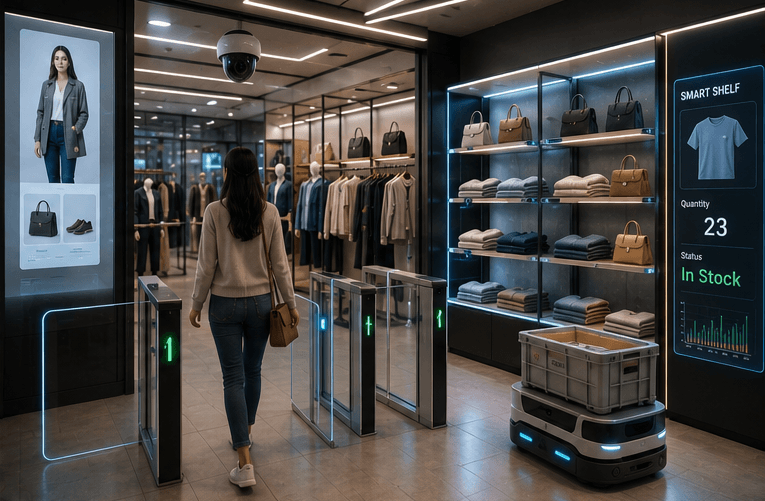
AI is helping create a new generation of intelligent retail stores.
Computer vision, sensors, and automated payment systems allow customers to shop without standing in traditional checkout lines.
Smart shelves monitor inventory automatically, while AI analyzes customer movement to improve store layouts.
These innovations create faster, more convenient shopping experiences for customers.
Benefits and Challenges
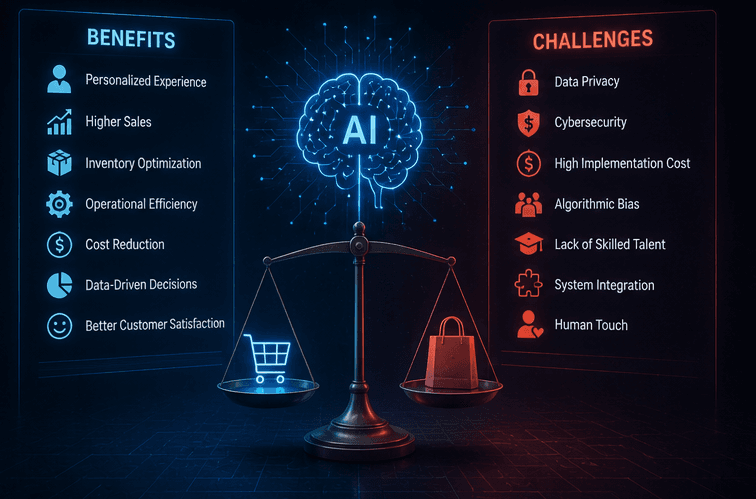
AI provides significant advantages for retailers, but successful implementation requires responsible use of customer data.
Businesses must protect privacy, ensure cybersecurity, reduce algorithmic bias, and maintain transparency.
Human employees remain essential for customer relationships, creativity, and solving complex problems.
The strongest retail businesses combine intelligent automation with excellent human service.
- Personalized Shopping
- Better Customer Experience
- Inventory Optimization
- Higher Sales
- Customer Privacy
- Cybersecurity
- Ethical AI
- Human Service
The Future of Retail and E-Commerce
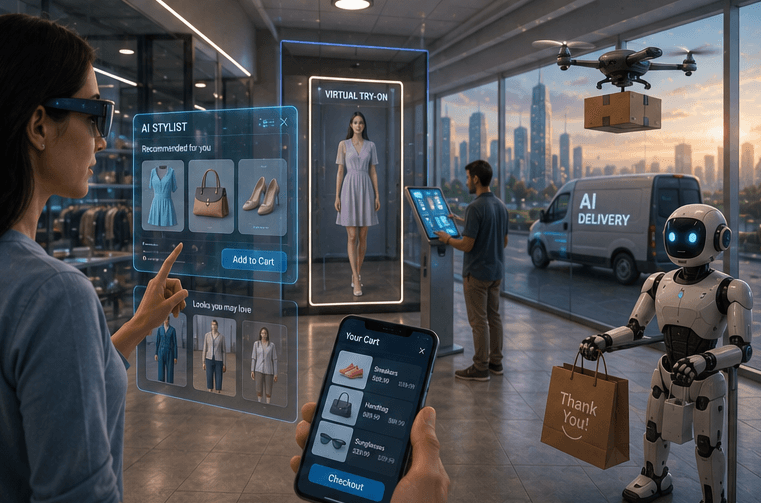
The next generation of retail will become increasingly intelligent, automated, and personalized.
AI will power virtual shopping assistants, visual search, voice commerce, autonomous delivery, and immersive shopping experiences using augmented and virtual reality.
Customers will receive highly customized experiences whether shopping online, on mobile devices, or inside physical stores.
Retail businesses that successfully combine AI with exceptional customer service will shape the future of commerce.
Conclusion
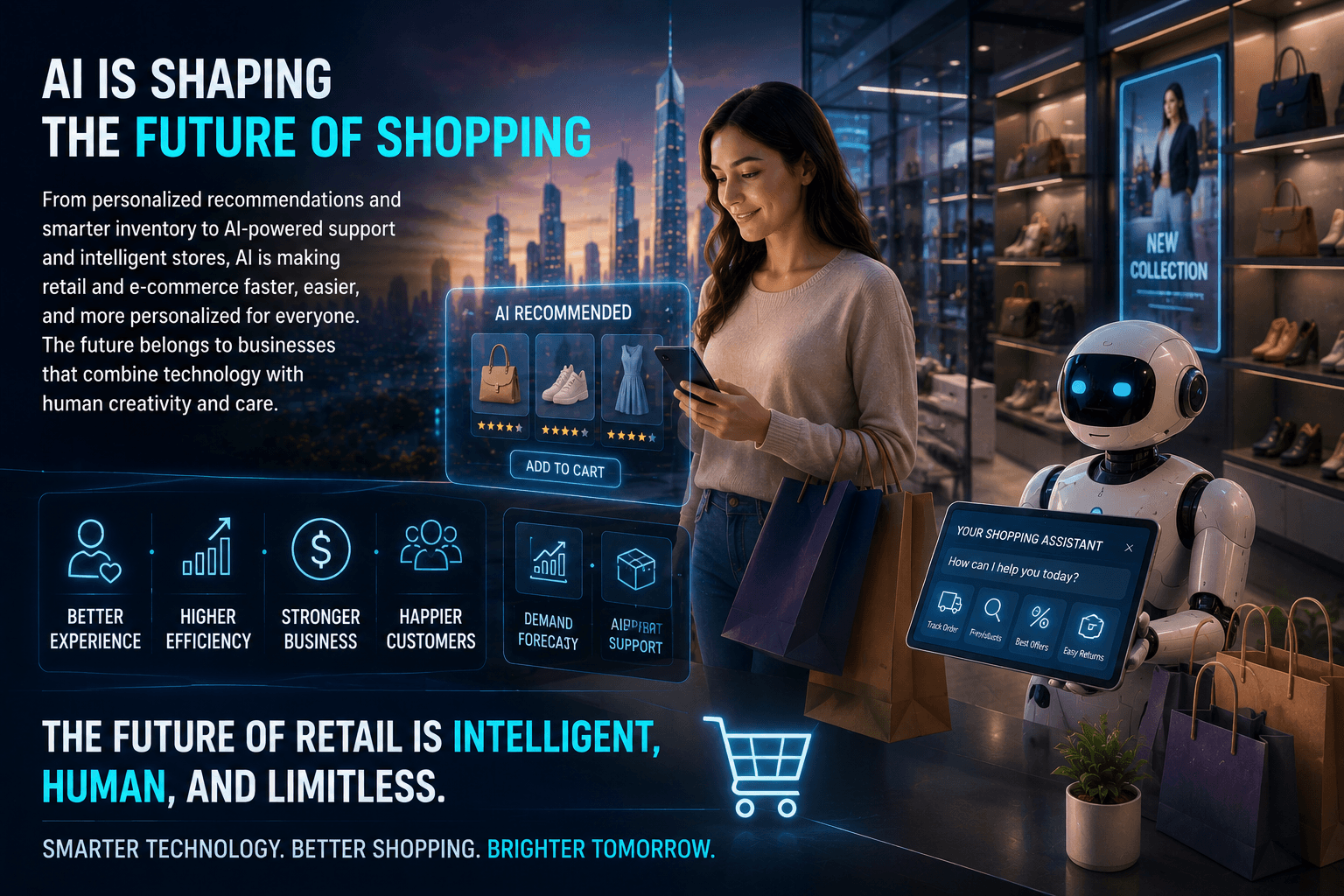
Artificial Intelligence is transforming retail and e-commerce by making shopping smarter, faster, and more personalized.
From product recommendations and customer support to inventory management and intelligent stores, AI is improving every stage of the shopping journey.
While challenges such as privacy and responsible AI remain important, the opportunities created by intelligent technology are enormous.
The future of retail will combine human creativity with AI-powered innovation to deliver better experiences for both businesses and customers.
Knowledge Hub
Related Tech Explained topics
Plain-language explainers to help you understand the concepts behind this article.

Tech Explained · Web Development
How Search Engines Work
Learn how search engines discover, crawl, render, index, retrieve, rank, and present webpages—and how SEO, AI answers, and privacy fit into the process.

Tech Explained · Artificial Intelligence
What is Artificial Intelligence (AI)?
Understand what artificial intelligence is, how AI systems learn and produce outputs, how machine learning and generative AI differ, and how to assess their benefits and risks.

Tech Explained · Software Development
What is an API (Application Programming Interface)?
Understand what an API is, how requests and responses work, how REST, GraphQL, RPC and webhooks differ, and how authentication, errors, versioning and security shape reliable integrations.
Share this article
Keep reading
Related Articles
More stories on similar topics from the NVR Nexus blog.

How AI Is Changing Media and Journalism
Artificial intelligence is changing how newsrooms research stories, analyze evidence, create formats, reach audiences, and verify digital media. The opportunity is significant—but so are the risks to accuracy, transparency, trust, and editorial independence.

How AI Is Changing the Legal Industry
Artificial Intelligence is transforming the legal industry through contract analysis, legal research, document automation, compliance monitoring, and predictive case insights. Discover how AI is reshaping the future of legal services.

How AI Is Changing Sports
Artificial Intelligence is transforming sports through performance analytics, injury prevention, intelligent coaching, AI referees, fan engagement, and data-driven decision making. Discover how AI is reshaping the future of sports.