How AI Is Changing Manufacturing
Artificial Intelligence is transforming manufacturing through predictive maintenance, smart robots, quality inspection, and intelligent automation. Discover how AI is making factories safer, faster, and more efficient.
Listen to this article
How AI Is Changing Manufacturing
10 parts · Tap play to start
Uses a natural English voice available through your browser or device. Article text is not uploaded to NVR Nexus.
Introduction
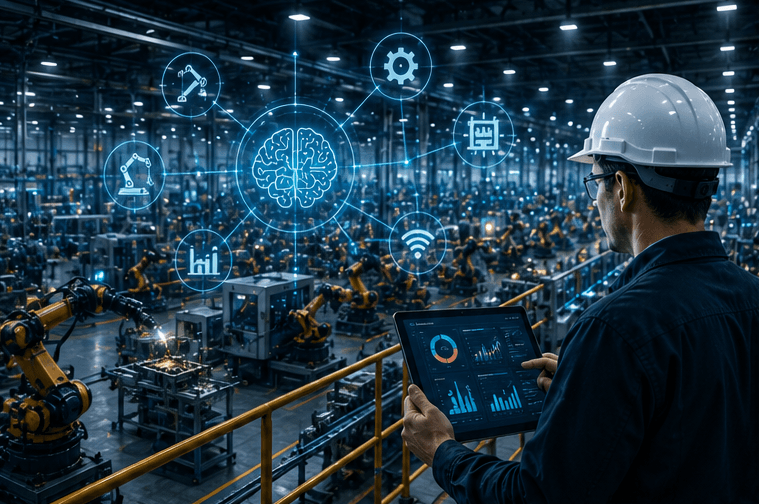
Manufacturing has evolved from manual assembly lines to highly automated production facilities.
Today, Artificial Intelligence is driving the next industrial revolution by making factories smarter, safer, and more efficient.
AI helps manufacturers monitor machines, improve product quality, optimize production schedules, and reduce operational costs.
Instead of replacing human workers, AI is becoming an intelligent assistant that supports better decision-making across the factory floor.
The future of manufacturing is being shaped by the collaboration between skilled workers and intelligent machines.
Predictive Maintenance
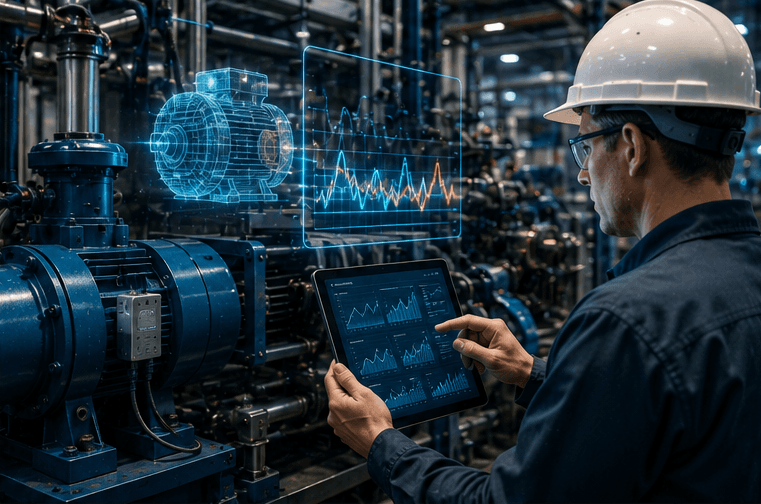
Unexpected equipment failures can stop production and create significant financial losses.
AI continuously analyzes data from sensors installed on industrial machines to detect early warning signs of wear and malfunction.
Instead of waiting for equipment to break, manufacturers can schedule maintenance before failures occur.
Predictive maintenance reduces downtime, extends equipment life, and improves overall productivity.
The best machine failure is the one that never happens.
AI-Powered Quality Inspection
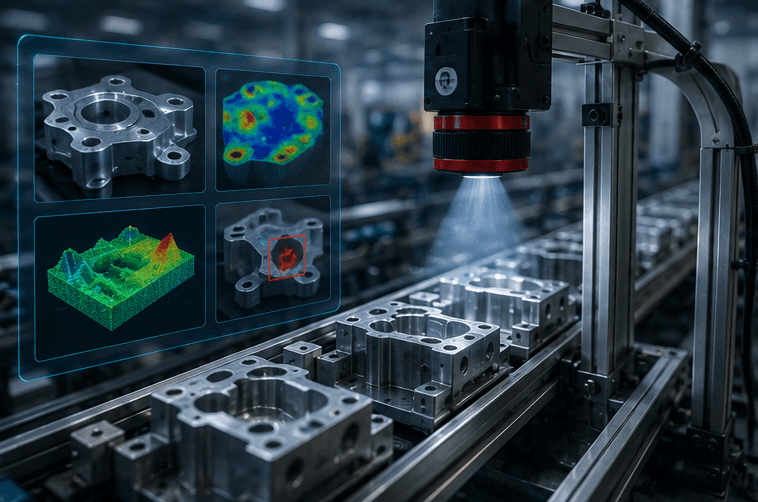
Maintaining consistent product quality is one of the biggest challenges in manufacturing.
AI-powered computer vision systems inspect products in real time, identifying scratches, cracks, missing parts, and other defects with remarkable accuracy.
Automated inspection helps manufacturers detect issues earlier in the production process.
This improves product quality while reducing waste and costly recalls.
- Computer Vision
- Defect Detection
- Product Inspection
- Image Analysis
- Real-Time Monitoring
- Quality Assurance
Smart Industrial Robots
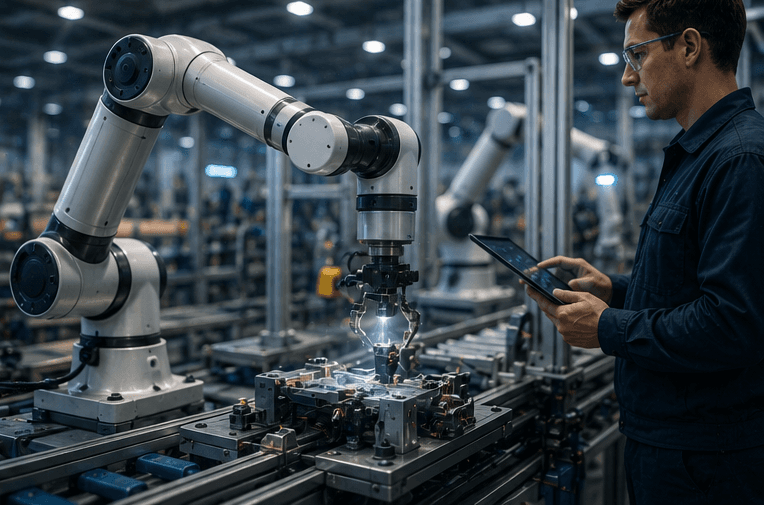
Industrial robots have been used in factories for decades, but AI is making them far more intelligent.
Modern robots can adapt to changing production requirements, recognize objects, and safely work alongside human employees.
These collaborative robots, often called cobots, improve productivity while reducing repetitive and physically demanding work.
AI enables robots to learn from data and continuously improve their performance.
Optimizing Supply Chains
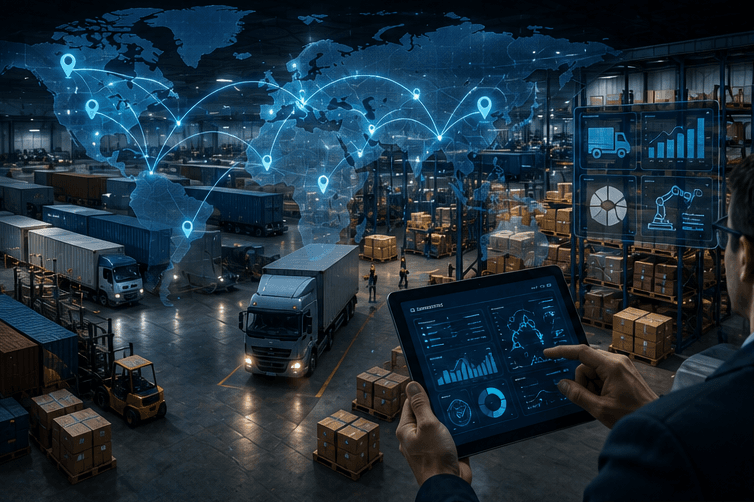
Manufacturing depends on efficient supply chains to deliver raw materials and finished products on time.
AI analyzes demand forecasts, inventory levels, transportation routes, and supplier performance to optimize logistics.
Smarter planning reduces delays, lowers inventory costs, and improves customer satisfaction.
AI helps manufacturers respond more quickly to changing market conditions.
- Demand Forecasting
- Inventory Management
- Logistics Optimization
- Supplier Analysis
- Warehouse Automation
- Production Planning
Factory Automation with AI
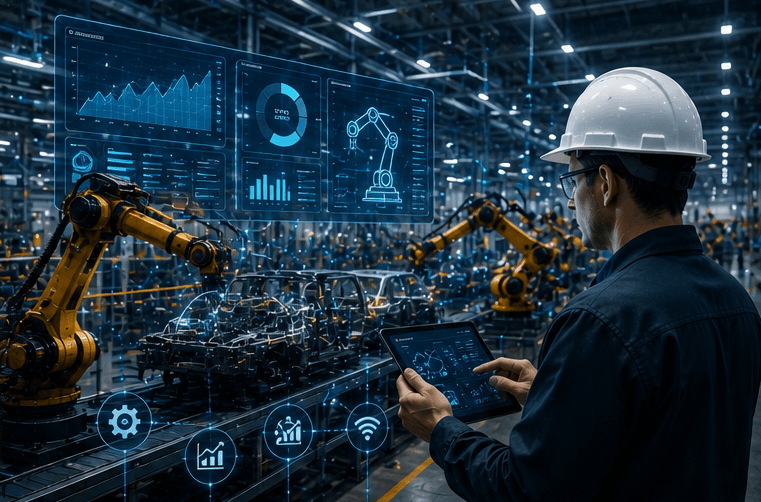
AI is automating many routine manufacturing processes, from scheduling production to monitoring energy consumption and coordinating workflows.
Smart factories collect data from connected machines, sensors, and software systems to make real-time operational decisions.
Automation improves efficiency while allowing employees to focus on problem-solving, innovation, and quality improvement.
The result is a more flexible and responsive manufacturing environment.
Benefits and Challenges
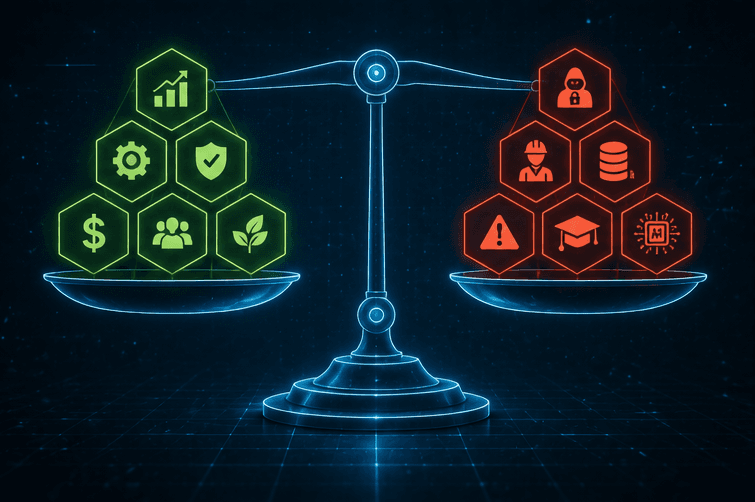
AI offers significant advantages for manufacturers, but successful implementation requires careful planning and investment.
Companies must address cybersecurity risks, workforce training, data quality, and system integration.
Human expertise remains essential for managing complex production processes and making strategic decisions.
The most successful factories combine intelligent automation with skilled employees.
- Higher Productivity
- Reduced Downtime
- Better Product Quality
- Lower Operating Costs
- Cybersecurity
- Employee Training
- Data Integration
- Human Oversight
The Future of Smart Manufacturing
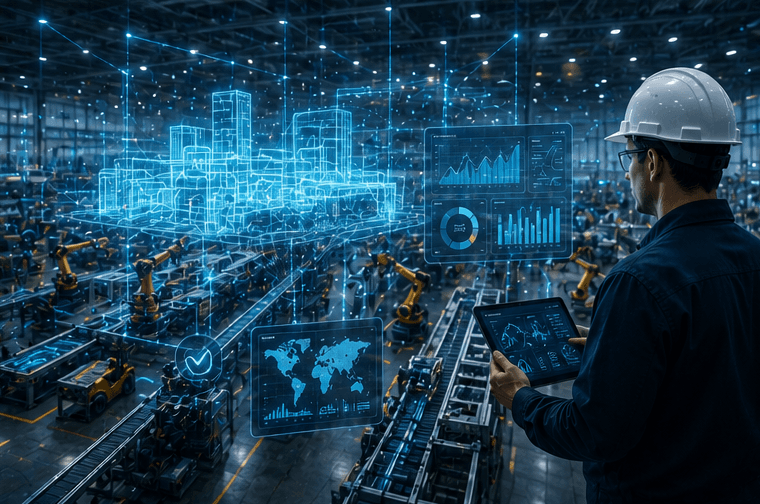
The factories of the future will become increasingly connected, autonomous, and data-driven.
AI will work alongside digital twins, IoT sensors, autonomous robots, and advanced analytics to optimize every stage of production.
Manufacturers will be able to predict demand more accurately, reduce waste, and customize products at scale.
Smart manufacturing will play a major role in building more sustainable, efficient, and resilient industries.
Conclusion
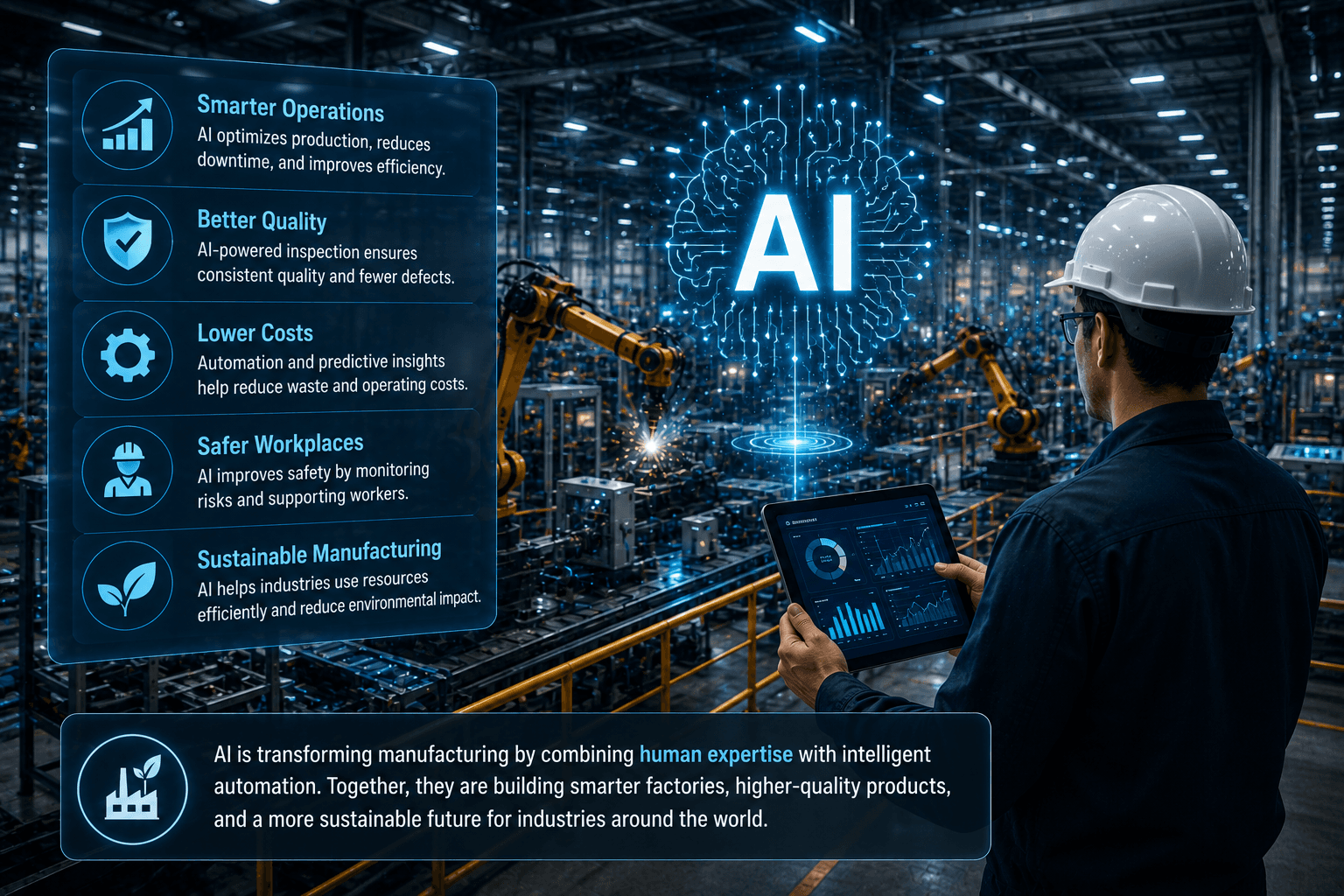
Artificial Intelligence is transforming manufacturing by making factories smarter, faster, and more reliable.
From predictive maintenance and quality inspection to intelligent robots and supply chain optimization, AI is improving every stage of production.
Although challenges such as cybersecurity and workforce adaptation remain, the opportunities created by AI are enormous.
The future of manufacturing will combine human expertise with intelligent automation to build safer factories, higher-quality products, and more sustainable industries.
Knowledge Hub
Learn the fundamentals first
Plain-language explainers to help you understand the concepts behind this article.

Share this article
Keep reading
Related Articles
More stories on similar topics from the NVR Nexus blog.

How AI Is Changing Media and Journalism
Artificial intelligence is changing how newsrooms research stories, analyze evidence, create formats, reach audiences, and verify digital media. The opportunity is significant—but so are the risks to accuracy, transparency, trust, and editorial independence.

How AI Is Changing the Legal Industry
Artificial Intelligence is transforming the legal industry through contract analysis, legal research, document automation, compliance monitoring, and predictive case insights. Discover how AI is reshaping the future of legal services.

How AI Is Changing Sports
Artificial Intelligence is transforming sports through performance analytics, injury prevention, intelligent coaching, AI referees, fan engagement, and data-driven decision making. Discover how AI is reshaping the future of sports.