How AI Is Changing Agriculture
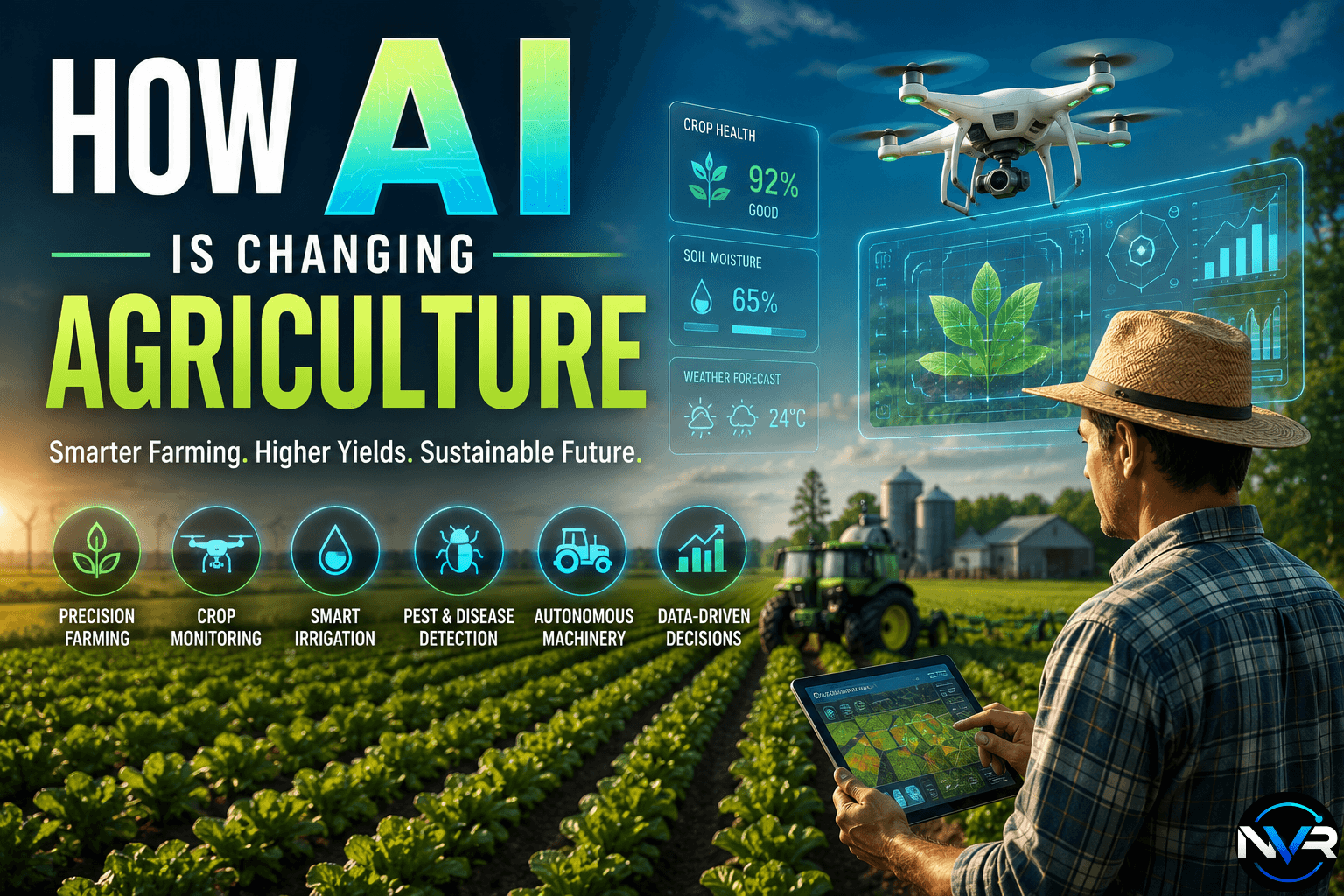
Artificial Intelligence is transforming agriculture through precision farming, smart irrigation, crop monitoring, and autonomous farming equipment. Discover how AI is helping farmers produce more food while using fewer resources.
Listen to this article
How AI Is Changing Agriculture
10 parts · Tap play to start
Uses a natural English voice available through your browser or device. Article text is not uploaded to NVR Nexus.
Introduction
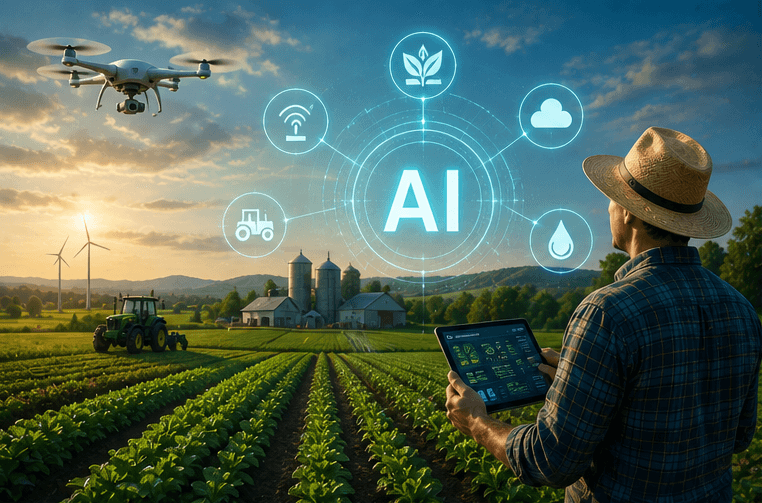
Agriculture has always depended on experience, timing, and careful observation.
Today, Artificial Intelligence is giving farmers powerful new tools to make smarter decisions and improve crop production.
From monitoring fields with drones to predicting weather patterns and automating farm equipment, AI is helping agriculture become more efficient and sustainable.
As the world's population continues to grow, producing more food while conserving resources has become increasingly important.
AI is emerging as one of the key technologies shaping the future of farming.
Precision Farming with AI
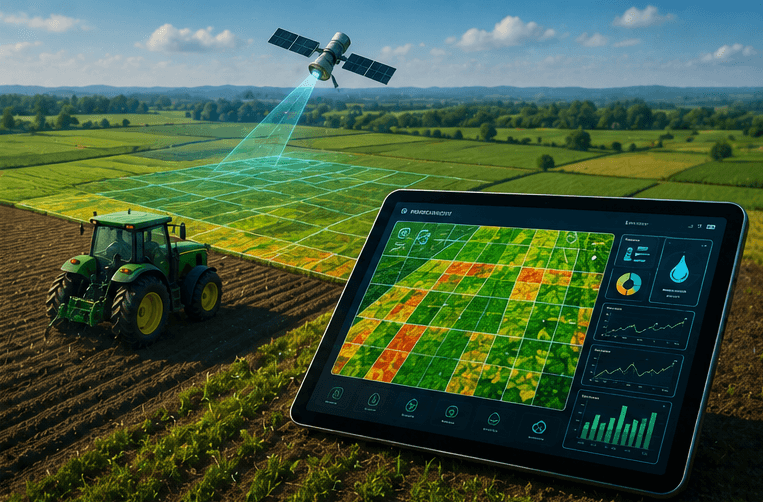
Precision farming uses AI to analyze data collected from satellites, drones, sensors, and farm equipment.
Instead of treating an entire field the same way, AI helps farmers understand the unique needs of different areas.
This allows crops to receive the right amount of water, fertilizer, and nutrients.
The result is healthier crops, lower costs, and reduced environmental impact.
The right amount of water, fertilizer, and care—exactly where it's needed.
AI-Powered Crop Monitoring
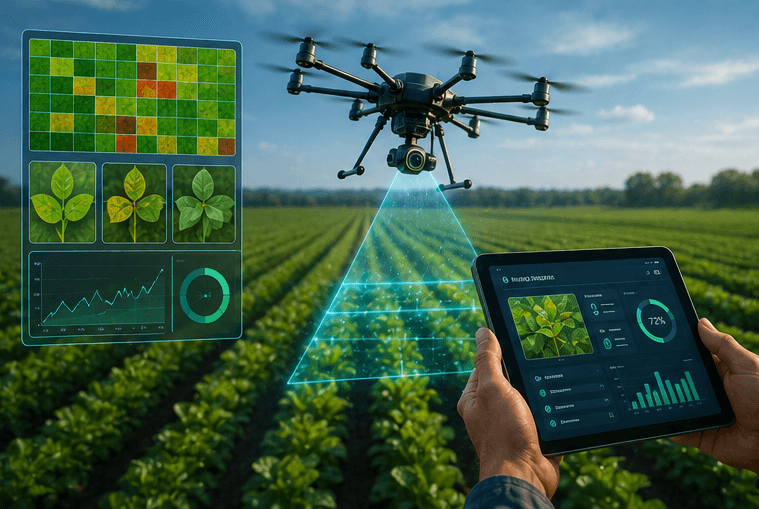
Monitoring thousands of acres manually can be extremely difficult.
AI-powered drones and computer vision systems continuously inspect crops for signs of disease, nutrient deficiencies, and poor growth.
Farmers receive early warnings that allow them to respond before problems spread.
Early detection helps improve yields while reducing unnecessary pesticide use.
- Drone Monitoring
- Satellite Imaging
- Disease Detection
- Crop Health Analysis
- Growth Tracking
- Yield Prediction
Smart Irrigation Systems
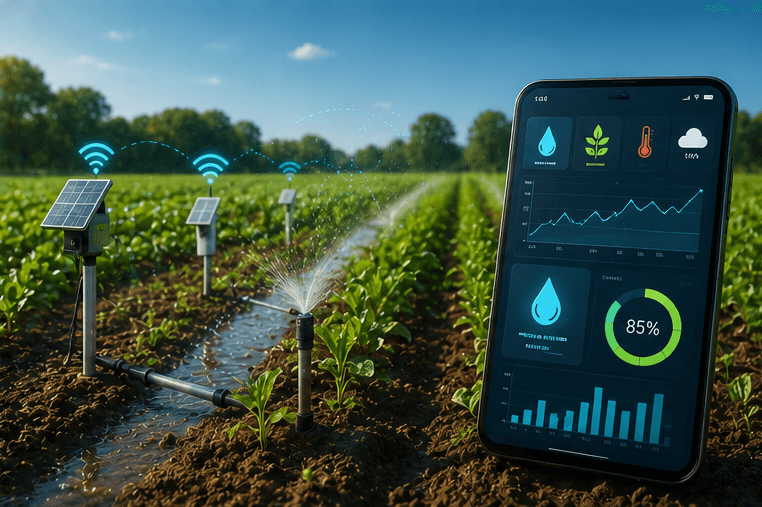
Water is one of agriculture's most valuable resources.
AI-powered irrigation systems monitor soil moisture, weather forecasts, and crop conditions to determine exactly when and how much water is needed.
This reduces water waste while ensuring crops receive optimal hydration.
Smart irrigation also lowers operating costs and supports sustainable farming practices.
Detecting Pests and Plant Diseases
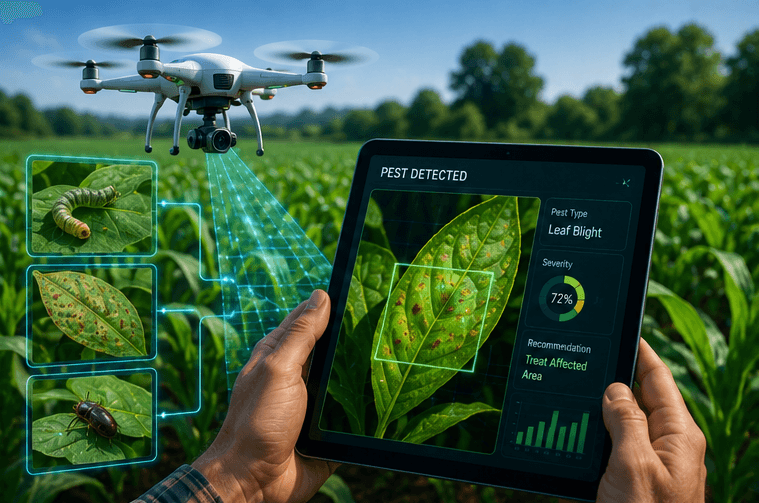
Pests and diseases can spread quickly if left untreated.
AI systems analyze images captured by drones, cameras, and smartphones to identify infected plants at an early stage.
Farmers can target specific problem areas instead of spraying entire fields.
This improves crop protection while minimizing chemical usage.
- Early Disease Detection
- Pest Identification
- Image Recognition
- Targeted Treatment
- Reduced Pesticides
- Health Monitoring
Autonomous Farm Equipment
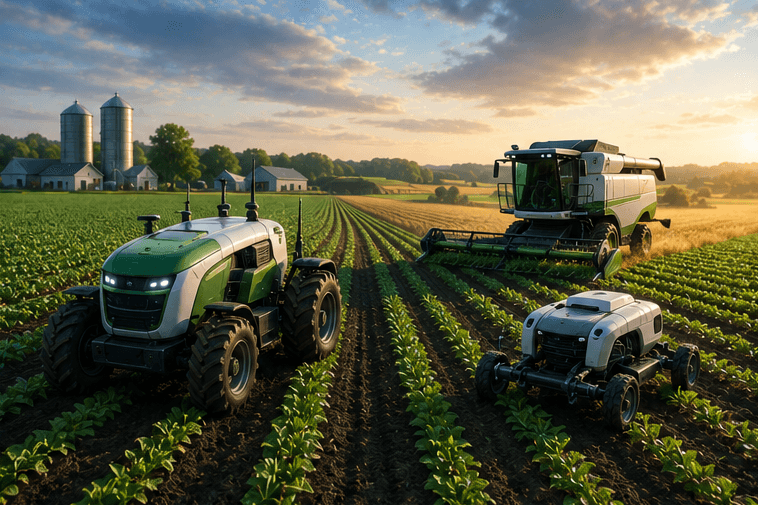
Modern farms are increasingly adopting AI-powered tractors, harvesters, and robotic equipment.
These machines can plant seeds, remove weeds, harvest crops, and navigate fields with minimal human intervention.
Automation helps address labor shortages while improving efficiency and accuracy.
Farmers can focus more on planning and managing operations instead of repetitive manual work.
Benefits and Challenges
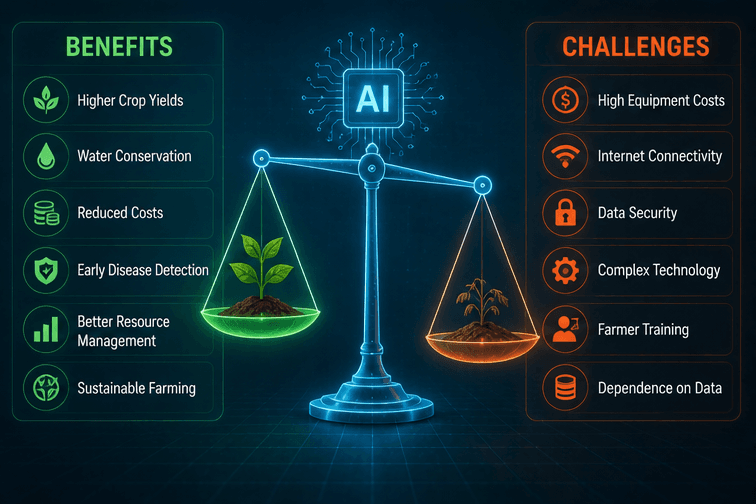
AI offers enormous opportunities for agriculture, but successful adoption requires investment, training, and reliable infrastructure.
Farmers must also consider data privacy, equipment costs, and internet connectivity in rural areas.
When implemented responsibly, AI can significantly improve productivity while supporting sustainable food production.
Human expertise remains essential because farming decisions often depend on local knowledge and changing environmental conditions.
- Higher Crop Yields
- Water Conservation
- Reduced Costs
- Early Disease Detection
- Equipment Investment
- Internet Connectivity
- Data Security
- Human Expertise
The Future of AI in Agriculture
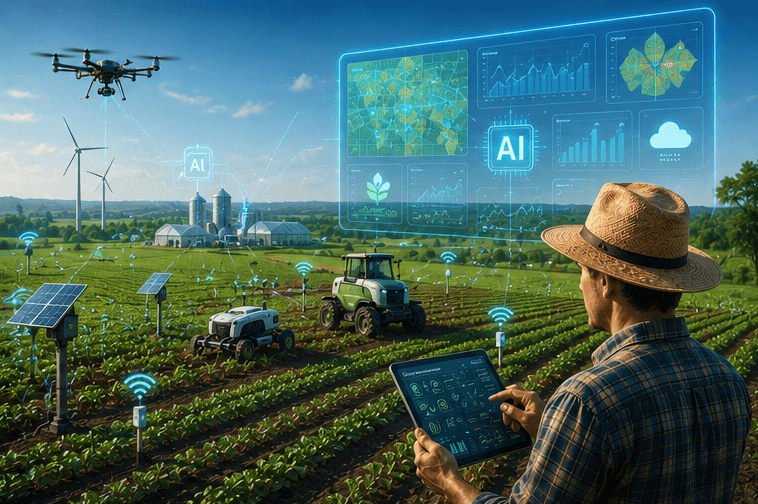
Over the next decade, AI is expected to become a standard part of modern farming.
Connected sensors, autonomous machinery, predictive analytics, and real-time weather intelligence will help farmers make faster and more accurate decisions.
Sustainable agriculture will increasingly depend on technologies that maximize food production while protecting natural resources.
AI will help create farms that are smarter, more productive, and better prepared for a changing climate.
Conclusion
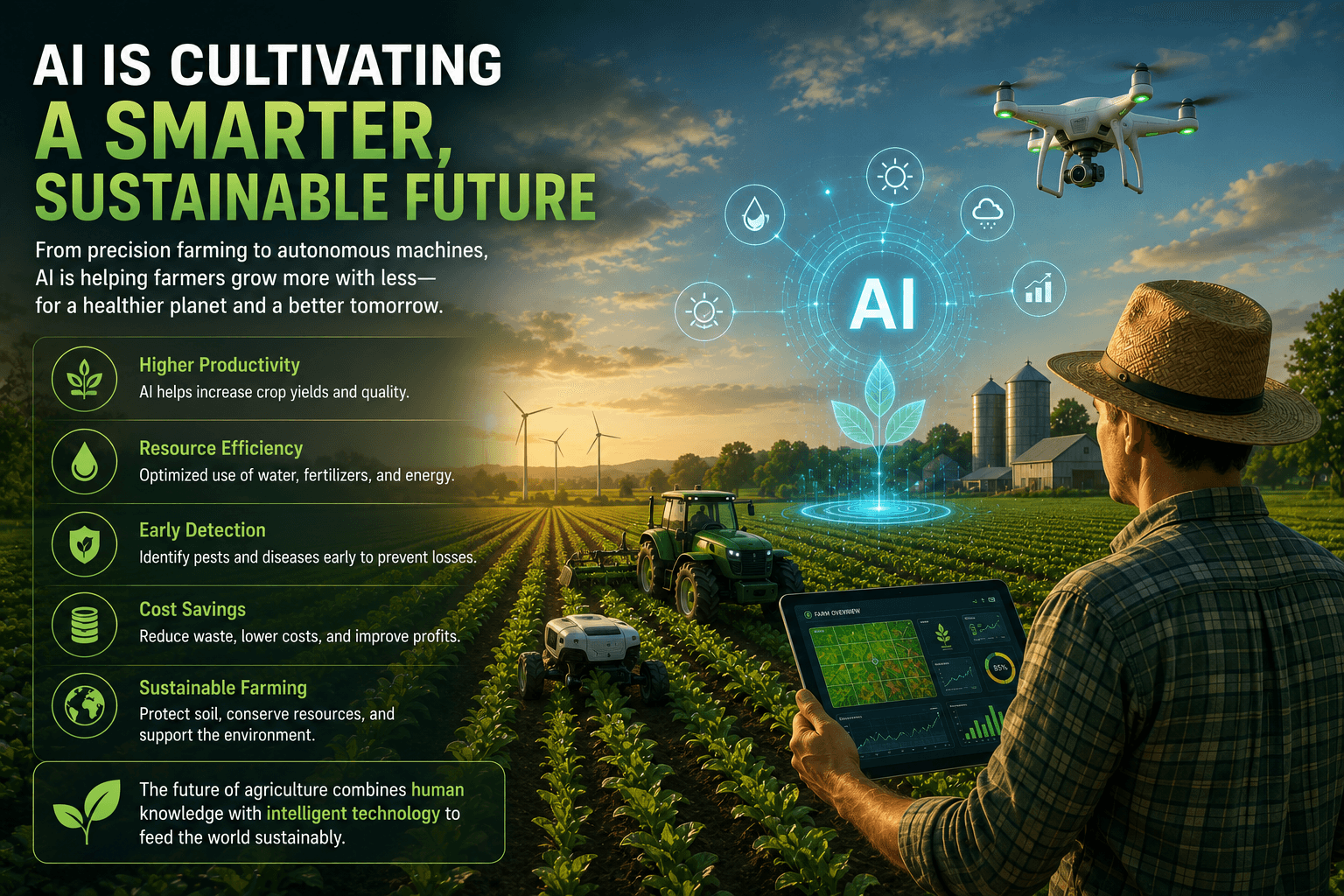
Artificial Intelligence is transforming agriculture from traditional farming into intelligent, data-driven food production.
From precision farming and crop monitoring to smart irrigation and autonomous machinery, AI is helping farmers produce more while using fewer resources.
Although challenges remain, AI has the potential to improve food security, reduce environmental impact, and support sustainable farming worldwide.
The future of agriculture will combine generations of farming knowledge with the power of intelligent technology.
Knowledge Hub
Learn the fundamentals first
Plain-language explainers to help you understand the concepts behind this article.

Share this article
Keep reading
Related Articles
More stories on similar topics from the NVR Nexus blog.

How AI Is Changing Media and Journalism
Artificial intelligence is changing how newsrooms research stories, analyze evidence, create formats, reach audiences, and verify digital media. The opportunity is significant—but so are the risks to accuracy, transparency, trust, and editorial independence.

How AI Is Changing the Legal Industry
Artificial Intelligence is transforming the legal industry through contract analysis, legal research, document automation, compliance monitoring, and predictive case insights. Discover how AI is reshaping the future of legal services.

How AI Is Changing Sports
Artificial Intelligence is transforming sports through performance analytics, injury prevention, intelligent coaching, AI referees, fan engagement, and data-driven decision making. Discover how AI is reshaping the future of sports.